 Lea
Lea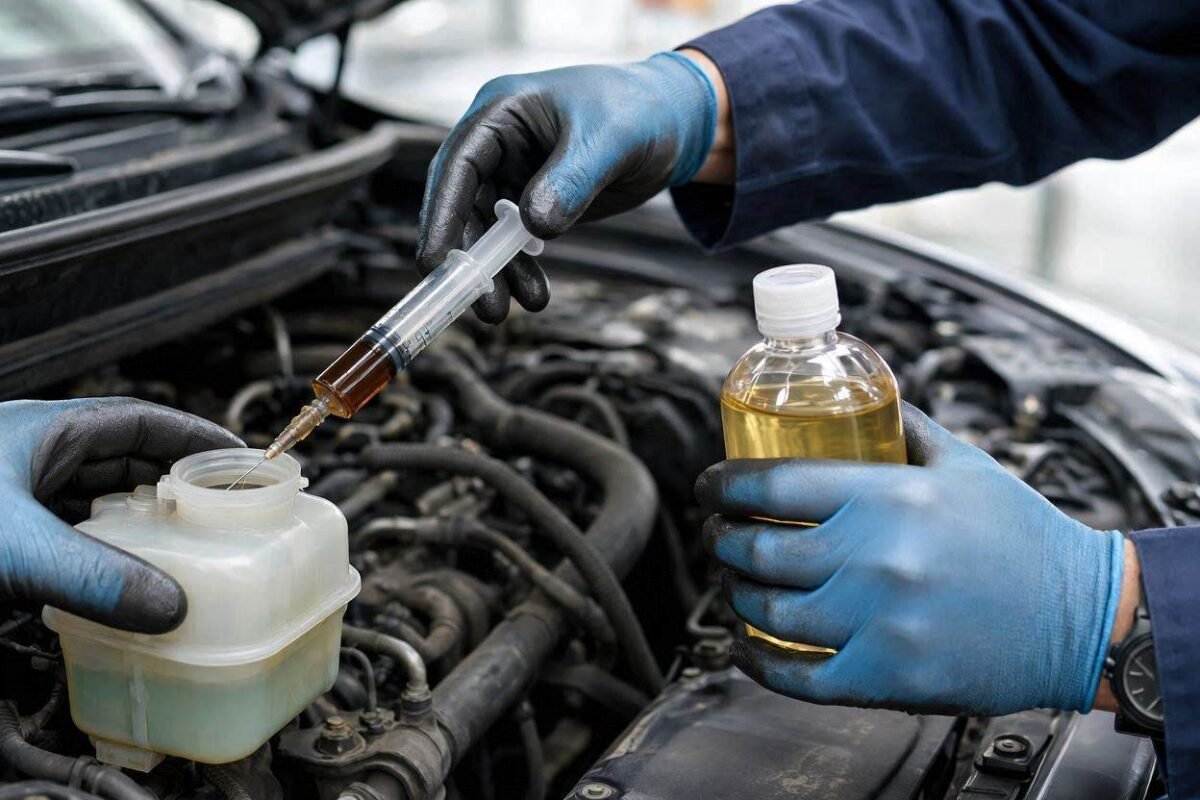
When most drivers think about brake maintenance, they focus on brake pads and rotors. While worn pads are a common issue, there is another critical component that is often completely overlooked: brake fluid.
Your car’s braking system is hydraulic. Every time you press the brake pedal, brake fluid transfers that physical force directly to the brake calipers, squeezing the pads against the rotors to slow down your vehicle. Without fresh, clean brake fluid, even brand-new brake pads won’t stop your car effectively.
In this guide, we will cover why brake fluid degrades, key signs it needs changing, and how often you should perform a brake fluid flush to keep your driving safe.
Why Does Brake Fluid Need to Be Changed?
Unlike engine oil, brake fluid operates in a sealed system and does not get burned off. However, standard glycol-based brake fluids (DOT 3, DOT 4, and DOT 5.1) have a unique property: they are hygroscopic. This means they naturally absorb moisture from the surrounding air over time, even through microscopic pores in rubber brake hoses and seals.
Water contamination causes two major problems in your braking system:
1. Lower Boiling Point (Vapor Lock Hazard)
Braking creates intense friction heat. Fresh brake fluid has a high boiling point (often above 400°F / 205°C). However, as the fluid absorbs water, its boiling point drops significantly. Under heavy braking—such as driving down a steep mountain road—the water in contaminated fluid can boil and turn into steam.
Because gas compresses while liquid does not, pressing the brake pedal compresses the steam bubbles instead of moving the brake pads. This phenomenon, known as vapor lock, causes the brake pedal to sink to the floor with zero stopping power.
2. Internal Corrosion
Water inside metal brake lines causes rust and internal oxidation. Corrosion damages expensive hydraulic components, including the master cylinder, brake calipers, and Anti-lock Braking System (ABS) valves.
5 Signs Your Car Needs Fresh Brake Fluid
1. A Soft or “Spongy” Brake Pedal
If pressing the brake pedal feels squishy, soft, or sinks lower to the floor than usual before the brakes engage, trapped moisture or air bubbles in the fluid are likely compressing under pressure.
2. Dark or Dirty Fluid in the Reservoir
Pop the hood and locate the translucent brake fluid reservoir near the master cylinder.
- Fresh Brake Fluid: Clear or slightly amber/yellow.
- Old, Contaminated Fluid: Dark brown or black, often with visible sediment floating at the bottom.
3. Decreased Braking Performance
If your vehicle takes noticeably longer distances to stop or requires much harder foot pressure on the pedal, degraded fluid with reduced hydraulic pressure transmission may be the cause.
4. ABS Warning Light on Dashboard
Modern cars use Anti-lock Braking Systems (ABS) that rely on clean, precise fluid pressure. Dirt or metal particles from corroded lines can trigger the ABS warning light on your instrument cluster.
5. Burning Smell During Heavy Braking
A harsh chemical odor after repeated hard braking indicates overheating fluid. If the fluid gets too hot, it loses its protective properties and requires immediate replacement.
How Often Should You Replace Brake Fluid?
As a general rule, automotive experts and manufacturers recommend replacing brake fluid every 2 years or 30,000 miles (48,000 km), whichever comes first.
However, you can easily test your fluid condition at home using two low-cost tools:
- Brake Fluid Test Strips: Dip a chemical strip into the reservoir to measure the level of copper corrosion in the fluid.
- Digital Moisture Tester Pen: Inserts two metal probes into the fluid and displays the water concentration percentage on an LED screen.
- 0% – 2% Water: Fluid is safe and healthy.
- 3% – 4%+ Water: Fluid is dangerously contaminated and must be flushed immediately.
DIY vs. Professional Brake Fluid Flush
Flushing a brake system involves removing all contaminated fluid from the master cylinder and bleeding each wheel caliper until clean fluid emerges.
- Simple Reservoir Top-Off Is Not Enough: Simply siphoning old fluid out of the top reservoir and pouring in fresh fluid leaves polluted, water-heavy fluid inside the lines down at the wheels.
- Full System Bleed Required: A complete flush requires opening the bleed valves at all four brake calipers in a specific sequence while pumping in fresh fluid. Because trapping air in the lines creates severe safety risks, beginner DIYers may prefer having a professional mechanic perform a pressure flush.
Final Thoughts
Brake fluid is the lifeblood of your vehicle’s stopping power. Flushing your brake fluid every two years is a low-cost preventive maintenance step that protects expensive ABS components from internal rust and ensures your brakes respond instantly when you need them most.