 Lea
Lea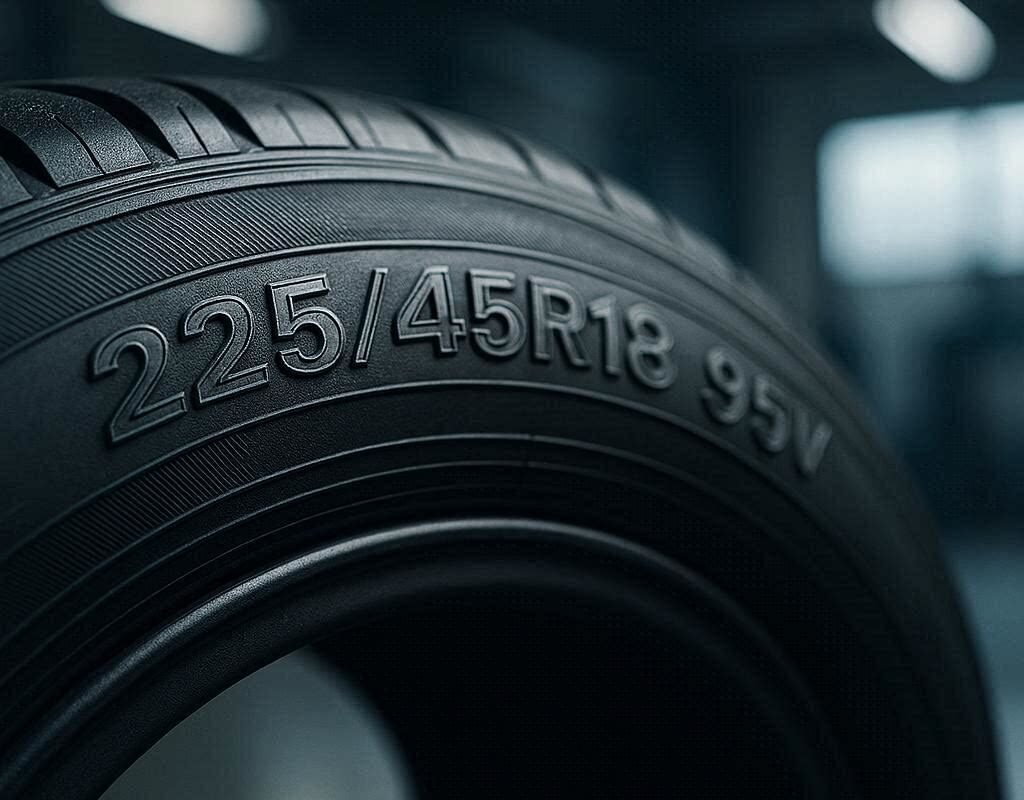
Tires are arguably the most critical safety feature on your vehicle. They are the only four points of contact between your multi-ton car and the asphalt. Despite their importance, many drivers treat tires as a “set and forget” component, paying attention only when a flat tire occurs.
Every tire sidewall is stamped with a complex sequence of raised letters, numbers, and codes. To the untrained eye, this looks like random code. However, these markings reveal essential information about your tire’s size, load capacity, speed rating, age, and manufacturing origin.
In this comprehensive guide, we will break down how to decode your tire’s sidewall markings, test tread wear at home, identify subtle signs of aging, and determine the exact right time to replace your tires to keep your journeys safe.
Decoding Your Tire Sidewall: What the Numbers Mean
When you look at the outer wall of your tire, you will notice a primary sequence that looks something like 205/55 R16 91V. Here is a step-by-step breakdown of what each section represents:
+---------------------------------------------------------------------------------+
|                          TIRE SPECIFICATION BREAKDOWN                           |
+-------+-------+------------+----------+---------------+-------------------------+
|  205  |  55   |     R      |    16    |      91       |            V            |
+-------+-------+------------+----------+---------------+-------------------------+
| Width | Aspect| Radial     | Rim Dia. | Load Index    | Speed Rating            |
| (mm)  | Ratio | Construct. | (Inches) | (615 kg/tire) | (Max 149 mph / 240 kmh) |
+-------+-------+------------+----------+---------------+-------------------------+
1. Section Width (205)
The first three-digit number indicates the width of the tire in millimeters from sidewall to sidewall. In this example, the tire is 205 mm wide. A wider tire generally offers more grip, while a narrower tire reduces rolling resistance.
2. Aspect Ratio (55)
The two-digit number following the slash represents the aspect ratio, or profile height. This is expressed as a percentage of the width. Here, the sidewall height is 55% of 205 mm (approx. 112.75 mm).
- Low-profile tires (e.g., aspect ratios of 35 or 40) offer sharper handling but a stiffer ride.
- Higher-profile tires (e.g., 65 or 70) absorb road bumps better, offering a smoother ride.
3. Construction Type (R)
The letter R stands for Radial construction. Radial tires feature internal fabric plies woven perpendicularly across the direction of travel. Over 98% of modern passenger car tires use radial construction.
4. Wheel Rim Diameter (16)
This number specifies the diameter of the wheel rim in inches that the tire is designed to fit. This tire must be mounted on a 16-inch wheel.
5. Load Index (91)
The load index is a numerical code that corresponds to the maximum weight a single tire can support when inflated to its maximum recommended pressure. A load index of 91 corresponds to 615 kg (1,356 lbs) per tire. Multiply this by four to find your vehicle’s total supported tire load.
6. Speed Rating (V)
The final letter indicates the maximum speed the tire can safely sustain over prolonged periods under optimal conditions:
| Speed Symbol | Maximum Safe Speed |
| S | Up to 112 mph (180 km/h) |
| T | Up to 118 mph (190 km/h) |
| H | Up to 130 mph (210 km/h) |
| V | Up to 149 mph (240 km/h) |
| W | Up to 168 mph (270 km/h) |
| Y | Up to 186 mph (300 km/h) |
How to Find Your Tire’s Production Date (DOT Code)
Rubber degrades over time due to exposure to oxygen, UV light, and heat—even if the tire is rarely driven. To determine how old your tire actually is, look for the DOT Code on the sidewall.
Look for a raised oval stamp containing a 4-digit number at the end of a line starting with the letters “DOT” (e.g., DOT HW9C 2224):
- First Two Digits (“22”): The week of manufacture (22nd week of the year).
- Last Two Digits (“24”): The year of manufacture (2024).
Crucial Rule: Regardless of tread remaining, automotive safety organizations recommend replacing tires that are 6 years or older from their production date.
4 Clear Signs Your Tires Need Immediate Replacement
Driving on worn or compromised tires greatly increases stopping distances and drastically raises the risk of hydroplaning in the rain.
1. Low Tread Depth (The Penny / Coin Test)
New passenger car tires typically start with 8/32″ to 10/32″ of tread depth.
- Minimum Legal Limit: 2/32″ (approx. 1.6 mm).
- The Quick Penny Test: Insert a U.S. Lincoln penny upside down into the shallowest tread groove. If Abraham Lincoln’s entire head remains visible, your tread is below 2/32″ and needs immediate replacement.
2. Built-in Tread Wear Indicator Bars
Modern tires feature small, raised rubber bars inside the tread grooves. As the tire wears down, these bars gradually become flush with the outer tread blocks. When the tread is level with these indicator bars, the tire has reached its legal wear limit.
3. Sidewall Cracks or “Dry Rot”
Exposure to sunlight and harsh weather causes structural oil in the rubber compound to evaporate over time. If you notice fine cracks forming on the sidewall or between tread blocks (known as dry rot), the rubber has lost its structural elasticity and is prone to blowouts.
4. Bulges, Blisters, or Bumps
A visible bulge on the sidewall indicates that the internal structural cords have snapped due to hitting a pothole or curb. Never drive on a tire with a sidewall bulge—it can rupture at any moment.
Frequently Asked Questions (FAQ)
Q: Should I replace all 4 tires at the same time?
A: Replacing all four tires simultaneously is optimal for balanced handling and traction. On All-Wheel-Drive (AWD) vehicles, replacing all four is critical because uneven tire diameters can cause costly damage to the transfer case and differential.
Q: Can I put wider tires on my stock wheels?
A: You can slightly increase width (e.g., moving from 205 mm to 215 mm) if your rim width supports it and there is adequate clearance inside the wheel well. However, altering tire dimensions can affect your speedometer reading.
Q: Why are my tires wearing down unevenly?
A: Uneven wear is typically caused by incorrect tire pressure, unbalanced wheels, or misaligned wheel geometry. Regular alignment checks and tire rotations every 6,000 miles help prevent this.
Summary
Inspecting your tires takes less than five minutes a month. By understanding how to read your tire sidewall codes, tracking their manufacture age via the DOT stamp, and running quick tread depth checks, you ensure your car stays safe, grippy, and fuel-efficient on every trip.